Exploring "Wherever The Wind Takes Me"
A J Greengrove
Published:Arpeggiating a single motive results in a deceptively simple prelude. Let’s delve into this audio dungeon - timestamps as a map, motif as a compass.
(Note to reader: these are my earlier blogposts heavy in music theory and meandering in thought. I’ll slowly revisit and backlink posts to clarify things.)
I came up with this piece after getting fed up with the nigh impossible choral-style anti-guitarisms in the post Exploring “Angels Carried Me Away” in this same album. To those familiar with early music improvisation concepts, here I list the scale-degree schemata (or partimento concepts) that I think might be useful for future improvisations.
To peek into this ‘audio dungeon exploration’ before shopping it in the Bandcamp market (for name your gold coins):
In the 0:14 mark begins a “moti del basso” of a 2-up-3-down sequence, which ends at 0:23 mark. Moti del basso is a partimento term, literally “movement of the bass”, basically sequences. The modal addition that gives the harmony a dorian sound steals the show: I wouldn’t call it a conventional 2-up-3-down sequence; or perhaps it speaks of the chameleon nature of the bass movement.
(LilyPond code)
#(ly:set-option 'resolution 200)
\version "2.24.4"
\language "english"
\pointAndClickOff
\header { tagline = "" }
melody = \relative c { c8 g' c d e d c g }
\score {
  <<
    \new Staff {
      \clef "bass"
      \melody
    }
    \new TabStaff \with {} { \melody }
  >>
}
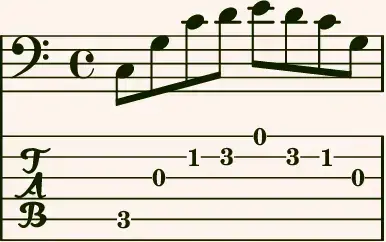
Figure 1: “Wherever The Wind Takes Me” Motif
The 0:28 mark begins a large-scale fonte, where each step lasts for four bass steps. The fonte ends on the 0:41 mark. Although I wouldn’t read this as a proper Fonte Prinner, the harmonies still cycle through a descending-fifths sequence. The 0:41 mark begins a romanesca with the falling bassline, but continues practically through the entire scale. In the 1:00 mark occurs a converging cadence.
Here’s the recording session video of the piece: