Exploring "Revelations in Ancient Tombs"
A J Greengrove
Published:Revelations in Ancient Tombs: what happens when you apply “chroma”, Gesualdo-style, on a romanesca?
(Note to reader: these are my earlier blogposts heavy in music theory and meandering in thought. I’ll slowly revisit and backlink posts to clarify things.)
To be fair, I should be talking more broadly of the Neapolitan school of composers, not Carlo Gesualdo alone. But we’re talking a niche within a niche within a… you get the point. However, this is a romanesca, with “chroma” applied to it: Elam Rotem describes chroma in his Early Music Sources YouTube video, and the topic is Carlo Gesualdo (Rotem 2021).
To peek into this ‘audio dungeon exploration’ before shopping it in the Bandcamp market (for name your gold coins):
Important to clarify, this improvisation is less early music stylistic, and applies more modern musical language; it is not a Gesualdo-style pastiche at all. However, improvisationally, the piece is very straightforward: it explores quasi-arpeggiating the underlying framework notes.
For the future, I would love to come back regarding more experiments with the renaissance concepts of chroma and musica ficta, applied in unconventional places. I will have more to add here later.
(LilyPond code)
#(ly:set-option 'resolution 200)
\version "2.24.4"
\language "english"
\pointAndClickOff
\header { tagline = "" }
melody = \relative ef' { ef1 ds c b af }
bass = \relative c { c1 b a g f }
\score {
  <<
    \time 4/4
    \new Staff { \clef "treble" \melody }
    \new Staff { \clef "bass" \bass }
    \new TabStaff \with {} <<
      \new TabVoice { \melody }
      \new TabVoice { \bass }
    >>
  >>
}
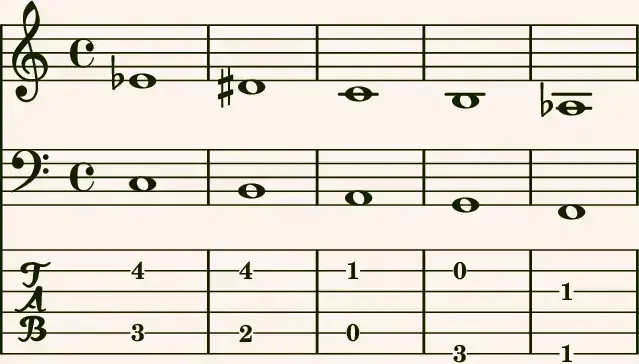
Figure 1: “Revelations in Ancient Tombs” Motif
Here’s the recording session video of the piece: