Exploring "To the Land of No Return"
A J Greengrove
Published:To the Land of No Return: A postlude that opens with a minor romanesca and reflects on the opening track.
(Note to reader: these are my earlier blogposts heavy in music theory and meandering in thought. I’ll slowly revisit and backlink posts to clarify things.)
The piece opens with a minor romanesca, and perhaps one anticipates a minor prinner in the 0:9 mark. However, what could also be thought of is the descending upper tetrachord. Heard this way, in that same 0:9 mark, we can hear the descending lower tetrachord.
To peek into this ‘audio dungeon exploration’ before shopping it in the Bandcamp market (for name your gold coins):
What is nice is the analogy between the VI chord in the 0:7 mark and the bII chord in the 0:14 mark, and how the latter transmutes into the half-diminished harmony. The aforementioned bII or phrygian chord leaves its mark: in 0:24 the arpeggio motif is heard in bII (or its inversion, if that’s relevant).
The 0:28 mark doesn’t exactly have a chromatically descending tetrachord schema, since it occurs in the middle voice instead of the bass. Interestingly, even if the bass lingers on scale degree 5, I can’t hear a ponte in it: rather, I hear roaming or seeking quality in the harmonies. In the 1:07 mark, the bII or phrygian occurs once more, affecting the descending lower tetrachord.
(LilyPond code)
#(ly:set-option 'resolution 200)
\version "2.24.4"
\language "english"
\pointAndClickOff
\header { tagline = "" }
melody = \relative fs' { fs4 g fs g a g fs g e }
\score {
  <<
    \time 4/4
    \new Staff { \clef "treble" \melody }
    \new TabStaff \with {} <<
      \new TabVoice { \melody }
    >>
  >>
}
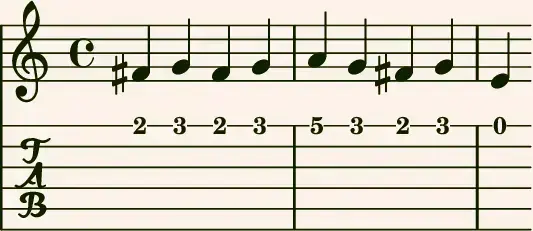
Figure 1: “To the Land of No Return” Motif
Here’s the recording session video of the piece: