Exploring "Waltz with Me Moose Giants"
A J Greengrove
Published:Waltz with Me Moose Giants: a chameleon motive, very useful for weaving counterpoint.
(Note to reader: these are my earlier blogposts heavy in music theory and meandering in thought. I’ll slowly revisit and backlink posts to clarify things.)
Where’s all the 3/4 pieces in the music of our time? Thematically this piece is an obvious dungeon synth parody. Let’s list some schemata for future improvisations. in the 0:06 mark we have a 7-6 suspension chain. The bass follows a prinner, and the melody could easily be replaced to follow one too.
To peek into this ‘audio dungeon exploration’ before shopping it in the Bandcamp market (for name your gold coins):
The 0:18 mark lingers on a predominant harmony, but doesn’t quite fit a stereotypical indugio. I’ll still tag this piece with “indugio” for later comparisons. The 0:35 mark begins a descending-fifths sequence, however, in the first step the bass start from the inversion, whereas in the continuation it starts from the root of the underlying harmony.
(LilyPond code)
#(ly:set-option 'resolution 200)
\version "2.24.4"
\language "english"
\pointAndClickOff
\header { tagline = "" }
melody = \relative c { c4. d8 c4 e }
\score {
  <<
    \time 3/4
    \new Staff { \clef "bass" \melody }
    \new TabStaff \with {} <<
      \new TabVoice { \melody }
    >>
  >>
}
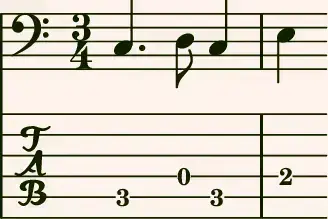
Figure 1: “Waltz with Me Moose Giants” Motif
The 0:42 mark chains another descending-fifths sequence, this time with proper fifth leaps in the bass, and the harmonic rhythm has doubled. The 1:02 mark doesn’t quite initiate a fonte: it should be read as a descending-fifths sequence with inversions to my ear.
Here’s the recording session video of the piece: